Level 45 dungeon plan: choose the loop your skills support
For a Chanter joining ordinary PvE dungeon groups with a healer. Start with conditional Dark Crush windows, useful party support and a recovery button. This community-reference setup is not a solo-healer promise, a PvP build or a measured best-DPS result.
Preview this level-45 dungeon plan →
| Your actual condition | Attack decision | Why |
|---|---|---|
| Dark Crush below skill level 16, or no matching trait selected | Use an available activation such as Impactful Crush when Dark Crush is ready; take its follow-up window. Use your basic attacks between windows. | Community beginner advice relies on activation windows; a high-rank continuous loop can fail with lower-rank skills. |
| Effective Dark Crush skill level 16+ AND the current tooltip confirms the selected cooldown-removal trait | Compare the unlocked follow-up behavior with the same target and gear. Keep recovery and movement available manually. | The threshold is community-reported; the selected tooltip and your test decide whether the branch applies. |
| You cannot stay in range or survive | Keep Rushing Smash for a safe approach, move for mechanics and reserve Recuperation for recovery. | More attacks on paper do not help when you cannot reach the target or must recover. |
What to invest in first
- Check the effective Dark Crush level and chosen specialization before spending to copy a late-game loop.
- Review Dark Crush and the Onslaught / Incandescent Blow basic-attack sequence first, using the current skill descriptions. This is an editorial order from beginner reports, not a fixed skill-point allocation.
- Add Spinning Strike only when its current conditions fit your loop. Keep Recuperation available and test its range with the group.
- Compare boards, equipment or Arcana only against a specific missing skill milestone; do not buy an entire endgame set just to follow the sample.
Stigma candidates and alternatives
Community group recommendations repeatedly include Undefeated Mantra, Sprint Mantra and Power of the Storm. Marchutan’s Wrath is a candidate for another Dark Crush window. Check available slots and the actual buff state; do not assume stacking or a permanent optimal fourth pick.
If survival is the issue, compare an available defensive option such as Guardian Blessing or Impeding Authority instead of forcing the same offensive slot. If an option is locked, keep the available baseline and record that gap. The planner stores these choices in notes without claiming that all are equipped at once.
Compare one change before your next run
Use the same target, skill levels, gear and buffs; include a full buff cycle rather than a short burst. Record missed activation, time out of range, resource pressure and recovery as well as damage. The site does not supply an automated macro or infer a DPS number from combat power.
Sources reviewed November 1, 2026; independent live-client testing remains pending. Beginner activation advice · Group support and specialization reports · Why test conditions and manual movement matter · Client-data skill reference and its scope
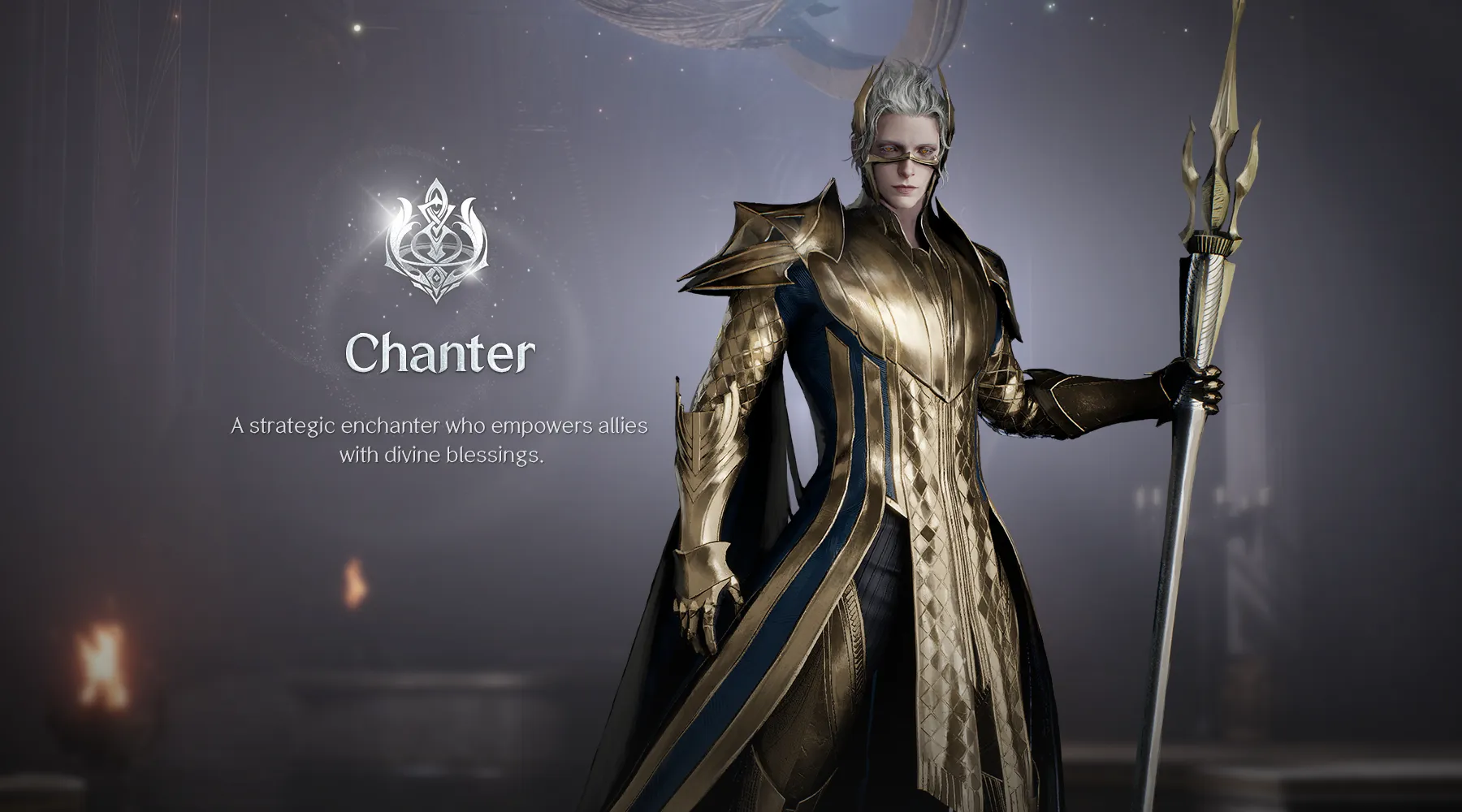
Is Chanter for you?
You like flexible value
You enjoy buffs, utility, and responding to what the party needs now.
You need a single scoreboard
Hybrid impact is spread across jobs and may feel less obvious moment to moment.
| Range | Melee / hybrid |
| Identity | Buffs and support |
| Learning curve | Moderate |
| Party job | Utility and flexible support |
AION 2 Chanter beginner build direction
Build around one repeatable damage loop, one reliable recovery or protection option, and the party buff you can maintain without interrupting every other action. Exact global coefficients and best-in-slot priorities remain under live verification.
| Priority | Beginner goal |
|---|---|
| Core loop | Use a short, repeatable melee sequence before adding situational skills. |
| Support | Keep the most useful party benefit active instead of rotating every buff blindly. |
| Safety | Reserve one heal, barrier, cleanse, or disengage for mistakes and mechanics. |
| Stats | Favor consistent uptime and survivability until global breakpoints are verified. |
| Stigmas | Unlock flexible utility first; delay expensive specialization until your role is clear. |
Can Chanter heal in AION 2?
Chanter can contribute recovery and defensive support, but new groups should not assume it is interchangeable with Cleric in every encounter. Treat healing as part of a hybrid toolkit: prevent avoidable damage, cover pressure windows, and keep the dedicated healer comparison in mind for harder content.
Core Chanter habits
Read the whole group
Your next useful action may not target the enemy.
Keep buffs purposeful
Understand which effect solves the current encounter problem.
Contribute without tunneling
Stay active in combat while preserving attention for support duties.
Chanter solo and group priorities
Keep the loop efficient
Use only the support tools that reduce downtime or make the next pull safer. Do not spend every cooldown on routine enemies.
Watch the party, not only the target
Maintain useful buffs, preserve emergency utility, and communicate which support effects you can cover.
Chanter skills: when to use them and what to check
Three community client-data samples from build 0.0.4387.0. Source descriptions rechecked October 11, 2026; current-client behavior is not independently tested. The exercises below are editorial practice suggestions, not damage rankings or a fixed rotation.
Recuperation
Situation: Party recovery.
The reference describes party healing, debuff removal and later healing ticks.
- Confirm in your client
- Check who is within support range; watch the initial heal and later ticks separately.
- Common mistake
- Using it automatically without checking party health or range.
- If it does not work
- If recovery misses an ally, check position and the current tooltip before changing your skill choice.
Rushing Smash
Situation: Approach a target.
The reference describes a rush, nearby damage and MP recovery.
- Confirm in your client
- Pick a safe destination; inspect where the rush ends before repeating it.
- Common mistake
- Rushing through danger or into an extra pack.
- If it does not work
- Keep your current safe approach if the landing position is unclear.
Impactful Crush
Situation: Conditional follow-up.
The reference describes a stun chance and a temporary Dark Crush follow-up.
- Confirm in your client
- Watch the activation indicator; try the follow-up only when it is available in your client.
- Common mistake
- Treating the follow-up as always available or control as guaranteed.
- If it does not work
- If it does not activate, record the target condition and indicator rather than forcing a fixed sequence.
Community class tooltip source ↗ · Extraction methodology ↗
Record one useful practice result
- Choose one unlocked skill and one safe practice situation.
- Keep the same target, skill rank and equipment. Observe the effect or activation condition before adding another action.
- Write the result, failure condition and alternative in your build notes. Retest before using it in group content.
Named skills and a practice sequence
Community extraction of Global build 0.0.4387.0, reviewed October 3, 2026. These are base cooldowns and source unlock fields, before modifiers. The sequence below is an editorial exercise based on tooltip conditions, not a tested optimal rotation.
| Skill | Unlock | Base cooldown | Use / condition |
|---|---|---|---|
| Recuperation | 8 | 15s | Check its current tooltip and trigger before use. |
| Rushing Smash | 1 | 15s | Rushes to the target; use only with a safe landing position. |
| Impactful Crush | 3 | 15s | Can stun and briefly unlocks Dark Crush. |
Practice before using a fixed rotation
Only use Rushing Smash into a safe position. Test Impactful Crush followed by the briefly enabled Dark Crush. Keep Recuperation available for party recovery rather than spending it on cooldown automatically.
Compare gear for your actual role
The source lists Staff as this class weapon. Begin with usable quest upgrades. Compare one change at a time with the same target, skill levels and encounter conditions; record damage or healing uptime, resource use and deaths. These samples do not establish best-in-slot gear or a numerical stat priority.
Class skills and tooltip source · Preview this class practice plan · Methodology
Chanter: practice before your next group run
Editorial practice exercises reviewed October 3, 2026. These are not verified skill rotations or boss-specific counters. Use skills currently unlocked in your Global client and read their tooltips before testing.
| Situation | Response to practice | Exercise |
|---|---|---|
| A support effect expires | Check duration, range and the party state before refreshing it. | Apply one available support effect and observe its icon and expiry in the Global client. |
| Support conflicts with a mechanic | Handle the danger first, then resume support when positioning allows. | Practice a short attack or support sequence followed by movement on a chosen cue. |
| The group needs recovery | Confirm what your selected skills actually restore; coordinate with the party rather than assuming a healer replacement. | Tell the group which tested support response you can provide and when it is available. |
Turn practice into a usable build note
- Choose one situation above and one safe target or party practice opportunity.
- Write down the exact skill names, target restrictions and response that worked. If a tool is not unlocked, leave it out.
- Repeat under similar conditions. Change one action at a time and record failures as well as successes.
- Add the resulting sequence and its limitations to your class build draft; keep one available response for movement or danger.
Launch practice plan
| Basic loop | Maintain the important group benefit, contribute steady pressure, and keep emergency support available. |
| Before a dungeon | Clarify which buffs overlap, what you can cleanse or recover, and when the group needs support more than damage. |
| Common mistake | Chasing personal damage while a preventable party failure develops. |
| Verify at launch | Buff stacking, support range, healing contribution, Stigma choices, and whether effects apply party-wide. |
Continue your Chanter build
Barrier Spell was added as a regional Chanter Stigma; verify its global protection value and cooldown before making an expensive investment.
Turn this class guide into your own plan
- Inspect Chanter skill references and activation conditions.
- Record your skill and equipment priorities. Existing draft fields stay under your control; adding a source reference requires confirmation.
- Review a skill-check action for your current character.
Reference data is not a tested rotation. Check the current client before spending resources.
Chanter plans for three situations
Global reference · build 0.0.4387.0 · reference review October 3, 2026 · live testing pending
Record one successful response and one failure for your chosen scenario. Korean ranking reference: separate supplementary material.
Choose the situation you actually play. These are editorial practice plans built around the existing Global-client skill references, not tested best builds. Each preview uses the same three reference samples; its goal and evaluation change by situation.
| Situation | Goal | Plan |
|---|---|---|
| Leveling | Practice a short attack sequence with a reachable recovery key. | Preview leveling plan |
| Solo progression | Test recovery while moving and reserve a response for failed control. | Preview solo progression plan |
| Dungeon groups | Agree support duties; watch ally range and recovery before extending attacks. | Preview dungeon groups plan |
Choose passives and Stigmas by the problem you observed
- Record whether your attempt failed through missed activation, movement, resource shortage or recovery.
- Read the current tooltip of one unlocked passive or Stigma that addresses that problem. Check prerequisites and permitted slots.
- Keep the rest of the setup unchanged and repeat the same encounter. Compare uptime, recovery, resource use and failures.
- If the option is unavailable or the result is worse, retain the previous choice. Save the result and limitation in your build notes.
Stigma planning · Compare an equipment change · Add a skill-review action